Category: User Guides

  • Consumer SIMs vs Commercial IoT SIM Cards: What’s the Difference?

    Consumer SIMs vs Commercial IoT SIM Cards: What’s the Difference?

    Understanding the differences between consumer and commercial IoT SIMs can be pivotal for businesses. At first glance, a regular smartphone SIM and an IoT SIM may appear quite similar, but they serve distinct functions. But what makes them different from each other? Let’s delve into the specifics.

    Understanding Consumer SIMs

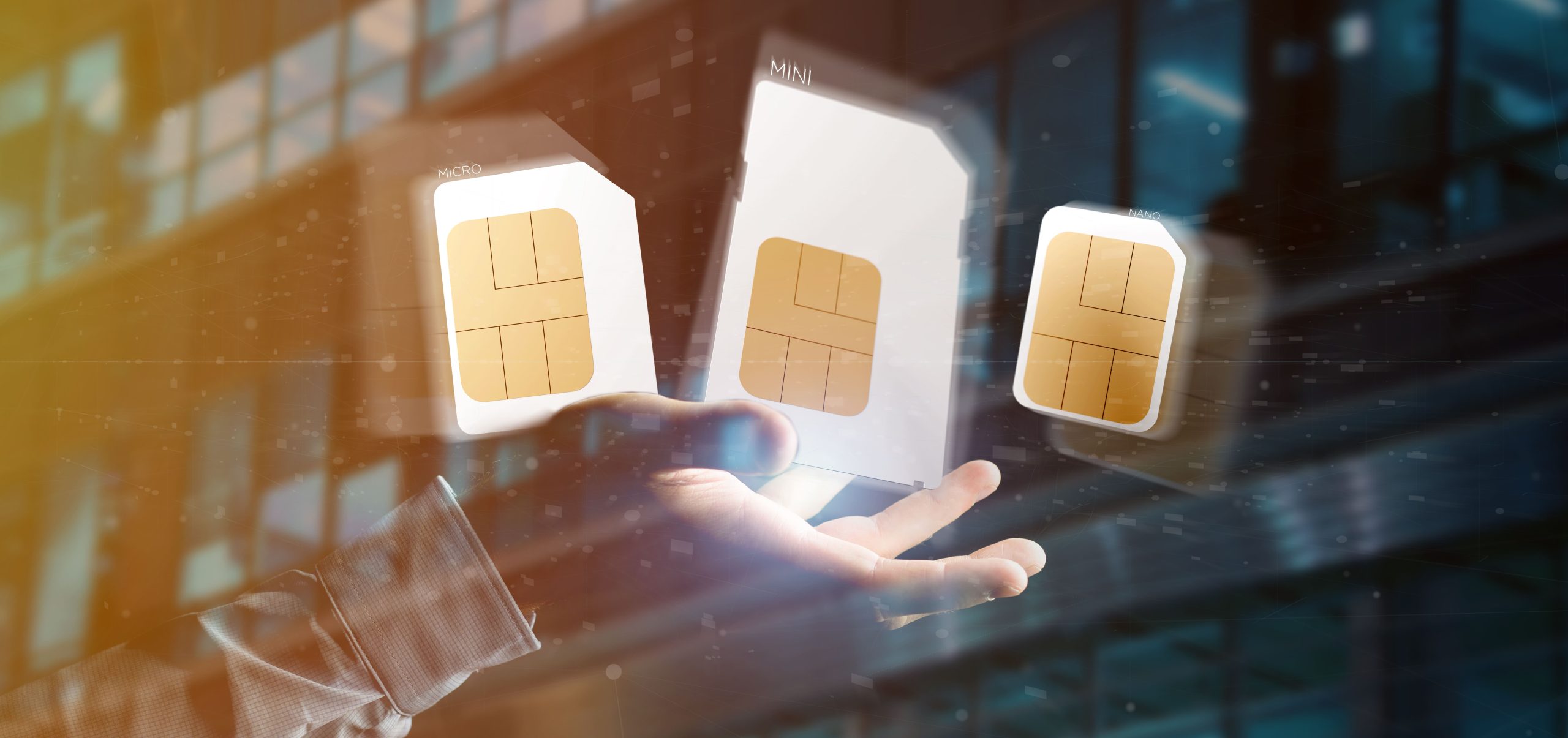
    Consumer SIMs, as the name suggests, are designed for everyday personal use in mobile phones and tablets. They connect your device to the network, allowing you to make calls, send texts, and use data. However, they’re not built for industrial applications or equipped to handle the unique demands of IoT devices.

    Cost is the main reason why people start with consumer SIMs for business use, but consumer SIM cards can be affected by network congestion, resulting in unreliable connections. Have you ever been to an event with loads of people without getting a signal? They also lack the robustness required for use in harsh or remote environments, where many IoT devices are often deployed.

    The Rise of Commercial IoT SIM Cards

    IoT SIM cards are engineered specifically for IoT applications, unlike their consumer counterparts. They offer many advantages that make them ideal for businesses and industrial use. Firstly, IoT SIM cards are constructed more durably and withstand harsher conditions. This is crucial for IoT devices that operate in extreme environments, such as weather monitoring stations or wind turbines.

    Secondly, IoT SIMsare designed to work autonomously without the need for human interaction for activation or operation. This makes them ideal for remote or inaccessible locations where manual intervention isn’t feasible. IoT SIM cards provide enhanced manageability. They can be controlled remotely, allowing businesses to monitor and manage their connected devices effectively. This includes capabilities like over-the-air updates and real-time diagnostics.

    Finally, IoT SIM cards, unless requested, aremulti-network SIMs, which means one SIM can connect to multiple networks; they seamlessly change the network if the signal drops below a specific strength to maintain a good connection, which increases reliability compared to consumer SIMs.

    Why Choose Commercial IoT SIM cards?

    The decision between consumer SIMs and commercial IoT SIM cards comes down to your specific needs. Commercial IoT SIM cards offer clear advantages in durability, scalability, manageability, and reliability if you’re deploying IoT devices, especially in challenging environments or at scale.

    IoT SIM cards offer a distinct advantage over traditional consumer SIMs, particularly in the realm of business and industrial applications. The most significant advantage lies in their capacity for control, transparency, and robust security. IoT SIMs provide businesses with an all-encompassing interface for managing their network status, diagnostic reports, and real-time data usage. These features provide complete control over data usage and add an extra layer of security, enabling businesses to instantly halt a SIM connection if a device is misplaced or compromised. This level of visibility and control is exclusive to IoT SIM cards and essential for businesses requiring reliable, always-on internet connectivity.

    Furthermore, IoT SIM cards are much more adaptable and flexible than consumer SIMs. Unlike conventional smartphone SIMs that come with rigid, lengthy contracts and are restricted to a single local network, IoT SIM cards allow for tailored usage and tariff adjustment to fit a company’s needs precisely. They can connect to multiple networks worldwide, eliminating coverage gaps and offering boundary-less connectivity. This flexibility is particularly beneficial for businesses as it removes the worry of substantial additional roaming charges. Moreover, IoT SIM cards prioritise reliability, ensuring constant connectivity and business continuity, a critical service for companies that rely on suitable connectivity for their operations.

    While consumer SIMs may be suitable for personal use, the demands of IoT require a more robust solution. Commercial IoT SIM cards rise to this challenge, providing the stability and control businesses need to leverage the full potential of their IoT devices. If you have any IoT requirements, contact us below, and a team member will contact you soon.

  • Why SD-WAN PRO is Perfect for Bonding and Failover

    Why SD-WAN PRO is Perfect for Bonding and Failover

    Businesses are more reliant than ever on stable and uninterrupted internet connectivity. A consistent and high-performance internet connection is crucial for maintaining operations for remote office work, cloud-based applications, or real-time communications. Let’s explore why SD-WAN PRO is the perfect solution for businesses seeking bonding and failover connectivity.

    What is SD-WAN?

    Software-Defined Wide Area Networking (SD-WAN) is an advanced network architecture that enables businesses to simplify, optimise, and secure their wide area network (WAN). SD-WAN allows businesses to combine different types of internet connections, such as traditional wired broadband, 4G, 5G, satellite, and even wireless, into a single, unified service. This flexibility allows businesses to prioritise reliable, high-performance connections while maintaining seamless operations across multiple locations.

    Anvil Mobile’s SD-WAN PRO leverages this powerful technology to provide businesses with a comprehensive solution that ensures bonding and failover capabilities. By integrating these features, SD-WAN PRO ensures businesses experience minimal disruption, even in the event of an internet connection failure.

    How Failover Works with SD-WAN PRO

    Failover is a critical feature for businesses that cannot afford downtime due to internet failures. Traditional internet backup solutions, such as 4G/5G routers, offer a basic failover mechanism. In this approach, when the primary broadband connection goes down, a backup 4G or 5G router can be used to maintain internet connectivity. However, these solutions can have limitations, such as using different IP addresses, which can disrupt services like remote access, VPNs, VoIP telephony, and CCTV systems.

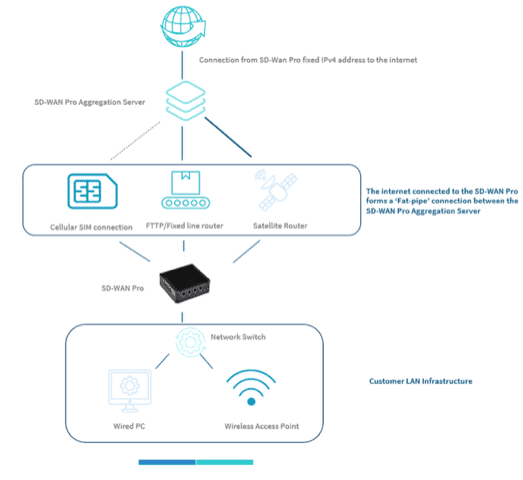
    Anvil Mobile’s SD-WAN PRO addresses these limitations by unifying multiple internet services under a single IPv4 IP address. When one connection fails, the SD-WAN solution automatically switches to the next available connection, ensuring the business stays online. The unique feature here is that the public IP address remains the same, meaning there is no disruption to remote access, VPNs, or VoIP services, making it a truly uninterrupted experience.

    This failover solution provides unparalleled reliability, keeping businesses connected even in the face of network failures. The SD-WAN PRO ensures a seamless switch between different internet connections, whether a 4G router, 5G mobile broadband, or traditional broadband, without causing downtime or performance issues.

    How Bonding Works with SD-WAN PRO

    Bonding is another powerful feature of SD-WAN PRO that sets it apart from traditional internet backup solutions. Bonding allows businesses to combine multiple internet connections. This approach is ideal for businesses that require high-speed internet and cannot afford the disruptions caused by congestion or connection failures.

    With SD-WAN PRO, the multiple internet services — including 5G, 4G, and broadband — are bonded together, enabling businesses to utilise the combined bandwidth of all the connections. This results in faster, more reliable internet speeds, making it perfect for high-demand applications such as media streaming, large-scale events, and point-of-sale (POS) systems at gatherings where high traffic can strain a single internet connection.

    The bonding feature is handy for businesses in industries like retail, media, or large-scale events, where reliable, high-speed internet is necessary to support many users. Whether it’s ensuring robust internet connectivity for a live-streamed event or maintaining continuous POS transaction processing at a busy venue, SD-WAN PRO ensures that businesses have a reliable internet connection, no matter the circumstances.

    Anvil Mobile’s SD-WAN PRO solution is designed to meet the demands of modern businesses, offering high-performance bonding and reliable failover solutions. Whether you’re running a small business or a large-scale enterprise, contact us below today and discover how it can optimise your business’s internet infrastructure.

  • How IoT SIMs are Empowering Remote Workers

    How IoT SIMs are Empowering Remote Workers

    The number of remote workers has been on the rise in recent years, and it is expected to continue to grow in the years to come. This is due to several factors, including the increasing availability of high-speed internet, the falling cost of mobile devices, and the growing demand for flexible work arrangements. Another factor was the COVID-19 pandemic, which made it challenging for companies to operate, largely due to the implementation of social distancing measures and remote work policies.

    The growing trend of remote working has transformed how businesses operate, especially in sectors where employees must stay connected from various locations, including remote and rural areas. Whether it’s for industrial teams, lone workers, or those working from home, staying connected with reliable, secure, and high-speed internet is crucial for maintaining productivity. IoT SIM cards have become a game-changer in this landscape, offering an optimal solution for improving connectivity and ensuring security. With the integration of 5G networks and multi-network SIMs, IoT SIMs empower remote workers, providing them with the tools to perform effectively and securely. In this blog, we explore the benefits of IoT SIMs, how they secure connectivity, and how they can be a preferred solution for remote workers, especially in high-risk or isolated environments.

    Benefits of Using IoT SIMs

    At the heart of remote working lies seamless connectivity. IoT SIM cards are specifically designed to enable devices to maintain a stable and secure connection over mobile networks, ensuring that remote workers always stay in touch. One of the most significant advantages of IoT SIMs is their ability to switch between multiple networks depending on coverage, ensuring no disruptions in service.

    • Reliability: IoT SIM cards are designed to work on multiple networks, which is particularly important in areas with patchy coverage. Previously, remote workers in rural locations or regions with limited mobile infrastructure faced significant connectivity challenges. With IoT SIMs, workers can seamlessly switch between networks, ensuring uninterrupted access to their workplace systems and communication tools.
    • Scalability: IoT SIM cards are easily scalable for businesses looking to expand their workforce or require a growing number of devices to be connected. These SIM cards are ideal for industries such as construction, utilities, and logistics, where workers in remote locations need reliable internet access to transmit data, receive real-time updates, and communicate with their teams.

    Why Secure Connectivity is Crucial

    While the benefits of connectivity are clear, security is a primary concern for businesses adopting remote work models. Without the proper security infrastructure, workers in remote areas could be vulnerable to cyber-attacks, data breaches, or hacking attempts, putting sensitive business information at risk.

    IoT SIMs are equipped with advanced security protocols, making them ideal for remote work. Their encrypted data transfer ensures that sensitive information shared by remote workers is kept secure, whether they are sending files or engaging in communication via VoIP services.

    One of the most effective ways to enhance security for remote workers is to integrate fixed IP SIMs. This allows employees to securely connect to their corporate network, and static private IP addresses offered by cellular connectivity providers give businesses even greater control over their networks. Remote workers can use static IP addresses to connect to internal systems securely, ensuring consistent and secure access from anywhere worldwide. This is particularly important for industries where regulatory compliance and data privacy are paramount, such as finance, healthcare, and legal sectors.

    IoT SIM Cards in Routers

    While there are multiple options for remote working solutions, a combination of multi-network IoT SIMs and routers offers the best performance for remote workers. A 5G-enabled router with IoT SIM cards provides high-speed, secure connectivity, even in areas with weak mobile signals. The ability to access multiple networks and switch between them as necessary ensures that remote workers can maintain a consistent and reliable internet connection.

    One example of this solution is the Anvil5G MiFi Router HL-873, which is paired with a multi-network sim and used for mobile food trucks for POS terminals, Wi-Fi, and other connectivity.

    IoT SIM cards are empowering workers across industries by ensuring seamless, secure, and reliable connectivity. If you have any router or remote IoT use cases, feel free to contact us, and we will be happy to help.

  • IoT Glossary

    IoT Glossary

    The term Internet of Things (IoT) refers to the network of physical devices, or “things,” that are integrated with sensors, software, and other technologies in order to communicate and share data with other internet-connected devices and systems.

    For industry innovators and organisations looking to establish IoT solutions, the first step is to identify the key terms that characterise this movement.

    • IoT – IoT stands for Internet of Things. It refers to the network of physical devices, vehicles, appliances, and other objects embedded with sensors, software, and connectivity, allowing them to collect and exchange data.
    • IMEI – IMEI stands for International Mobile Equipment Identity. It is a unique identification number assigned to a mobile device. IMEI is used to track and identify devices on cellular networks.
    • ICCID – ICCID stands for Integrated Circuit Card Identifier. It is a unique serial number assigned to a SIM card that identifies it on mobile networks.
    • Gateway – A gateway is a device or software that acts as an access point between different networks, enabling communication and data exchange between them.
    • IoT Control Platform – An IoT control platform is a software solution that allows users to manage and control their IoT devices, collect and analyze data, and automate processes.
    • Low Power Wide Area (LPWAN) – LPWAN is a wireless communication technology designed for long-range and low-power consumption. It enables IoT devices to transmit data over long distances while conserving battery life.
    • LTE-M – LTE-M (Long-Term Evolution for Machines) is a cellular network technology specifically designed for IoT devices. It offers efficient and cost-effective connectivity for devices with low to moderate data requirements.
    • Machine to Machine (M2M)M2M refers to direct communication between devices without human intervention. It allows machines to exchange information and perform tasks automatically.
    • Narrow Band IoT (NB-IoT) – NB-IoT is a low-power, wide-area network technology designed for IoT devices. It provides reliable and secure connectivity for devices with low data rates and long battery life.
    • eSIM – An eSIM, or embedded SIM, is a SIM card that is embedded directly into a device. It eliminates the need for a physical SIM card and allows for remote provisioning and management of the device’s connectivity.
    • Industrial IoT (IIoT) – IIoT refers to the use of IoT technologies in industrial settings. It involves connecting and integrating various devices, sensors, and systems to improve efficiency, productivity, and safety.
    • Wearable – Wearables are IoT devices that can be worn on the body, such as smartwatches, fitness trackers, and health monitors. They collect data about the user’s activities, health, and location.
    • Regional Breakout – Regional breakout refers to the process of routing network traffic from an IoT device to a region-specific server or data center for localized processing or storage.
    • Access Point – An access point is a device that enables wireless devices to connect to a wired network, typically providing Wi-Fi connectivity.
    • Telematics – Telematics is the combination of telecommunications and informatics. It involves using technology to transmit, receive, and store information about vehicles, such as GPS data, vehicle diagnostics, and driver behavior.
    • IP Address – An IP address is a unique numerical identifier assigned to each device connected to a computer network, allowing it to be identified and communicate with other devices on the internet.
    • IoT ModuleAn IoT module is a hardware component that incorporates communication capabilities, such as cellular connectivity or Wi-Fi, into an IoT device.
    • Modem – A modem is a device that converts digital signals from a computer or IoT device into analog signals that can be transmitted over a telephone or cable line and vice versa.
    • RouterA router is a networking device that forwards data packets between computer networks. It acts as a central hub for directing traffic and managing communication between devices on a network.
    • API – API stands for Application Programming Interface. It is a set of rules and protocols that allows different software applications to communicate and interact with each other.
    • APN – APN stands for Access Point Name. It is a network identifier that allows an IoT device to connect to a specific cellular network, enabling data transmission.
    • Cold Chain – Cold chain refers to the process of managing and monitoring the temperature-controlled storage and transportation of perishable goods, such as food, vaccines, and pharmaceuticals, to maintain their quality and integrity.
    • IPsec – IPsec stands for Internet Protocol Security. It is a set of protocols and standards used to secure internet communications by encrypting and authenticating IP packets.
    • MNO – MNO stands for Mobile Network Operator. It is a telecommunications provider that owns and operates the infrastructure necessary to provide mobile communication services to customers.
    • Steered SIM – A steered SIM refers to a SIM card that is programmed to prioritize connection to a specific network or operator over others.
    • Unsteered SIM – An unsteered SIM refers to a SIM card that is not programmed to preferentially connect to a specific network or operator, allowing it to connect to any available network.
    • Network Whitelisting – Network whitelisting is a security measure that allows only you to access pre approved websites
  • Understanding IoT and M2M: The Differences and Use Cases

    Understanding IoT and M2M: The Differences and Use Cases

    Everywhere we go, whether it’s our homes, workplaces, or the streets, we’re in constant contact with IoT devices. The Internet of Things, one of the fastest growing sectors, is deeply woven into our daily activities without realising it. With an ever-growing list of use cases from point of sale (POS) terminals to environment monitoring – connectivity is becoming part of our lives. However, there has been a surge in both enthusiasm for and confusion about IoT, particularly when it comes to differentiating it from M2M technology.  Internet of Things (IoT) and Machine-to-Machine (M2M) communication. While they might seem synonymous due to their overlapping applications, there are subtle differences between the two. This blog post dissects these technologies, their unique characteristics, and their real-world applications.

    What is IoT?

    The Internet of Things (IoT)refers to a network of interconnected devices that communicate and exchange data with each other over the Internet. These devices, or “things,” can range from everyday household items like refrigerators and thermostats to complex industrial machinery. The true power of IoT doesn’t merely lie in connecting devices; it manifests in creating innovative, efficient systems that learn from the data they collect, make autonomous decisions, and improve lives or business operations.

    What is M2M?

    Machine-to-machine (M2M) connectivity, a subset of IoT, involves direct interaction between devices via wired or wireless networks, void of human intervention. M2M typically employs point-to-point communication with well-defined interfaces. M2M communication is a technological innovation that allows devices to interact and exchange information directly through various means, including wired and wireless networks. Its primary purpose is to streamline processes and enhance overall efficiency by negating the need for human involvement in specific tasks.

    Here’s a quick comparison table to highlight the key differences:

    The Internet of Things (IoT) is engineered to be versatile and capable of adapting to novel devices and technologies. It can seamlessly blend with a wide range of devices, systems, and platforms, thus fostering scalability and interoperability. In contrast, Machine-to-Machine (M2M) communication primarily focuses on machine interactions, with less emphasis on direct human interaction. IoT is designed to be flexible and capable of adapting to new devices and technologies. It can integrate with various devices, systems, and platforms, facilitating scalability and interoperability. On the other hand, M2M is usually designed for specific use cases and requires customisation for different applications and industries.

    Use Cases:

    IoT

    1. Smart Homes: IoT has revolutionised home automation with smart devices like thermostats, security systems, and even refrigerators. These devices can be controlled remotely via smartphone apps and can communicate with each other to create an integrated, intelligent ecosystem.
    2. Wearable Technology: From fitness trackers to smartwatches, wearable IoT devices are becoming increasingly popular. They collect data on health metrics like heart rate and sleep patterns, providing users with valuable insights into their well-being.
    3. Smart Cities: IoT technology is at the heart of smart cities, helping manage traffic congestion, reduce energy consumption, and improve public safety through intelligent street lighting, waste management systems, and more.

    M2M

    1. Manufacturing: M2M connectivity is widely used in manufacturing for predictive maintenance. Sensors installed on machinery monitor performance and detect anomalies, preventing costly breakdowns and downtime.
    2. Healthcare: In healthcare, M2M technology enables remote patient monitoring. Devices like heart rate monitors can send data directly to healthcare providers, allowing for timely intervention in case of abnormal readings.
    3. Fleet Management: M2M communication plays a crucial role in fleet management, enabling real-time tracking of vehicles, fuel management, and driver safety monitoring.

    IoT and M2M technologies offer solutions for collecting, storing, and sharing data between devices with little human oversight. They are increasingly intertwined in terms of device management, overseeing strategies for both IoT and M2M devices. As such, the distinction between IoT and M2M is becoming increasingly blurred. Here at Anvil, we pride ourselves on providing the best connectivity solution for our customers. If you have any use case that requires connectivity, contact us below, and a member of our team will be In touch shortly!

  • What is a fixed IP SIM?

    What is a fixed IP SIM?

    The fixed IP data SIM is our flagship solution. This solution takes data communication to the next level and gives our customers what we refer to as business-grade mobile broadband. We know that companies like to use IoT solutions in their operation for flexibility, but they would want the assurance that the information that was sent would not be compromised and that the performance was as consistent as possible.

    What is a fixed IP SIM?

    A Fixed IP SIM refers to a SIM card assigned to a specific, static IP address. This assignment allows the SIM card to maintain a consistent, unchanging IP address and two-way connection, which is crucial for applications where a device needs to be remotely accessible over the Internet at all times. Having a fixed IP on a SIM card ensures that the device can always be reached using the same address, facilitating reliable remote access and management.

    This capability is particularly valuable in the Internet of Things (IoT) sector, where devices often need to send and receive data without human intervention. In practical terms, having a fixed IP for an IoT device means that it can be directly accessed from anywhere, making it possible to retrieve information, perform updates, and manage the device remotely. This feature enhances security and control over the device, as the server it connects to can consistently identify it via its permanent IP address.

    Industries Fixed IP SIMs are used in

    •  Security Cameras
    • Remote Access and Management
    • Monitoring of remote devices
    • Smart devices
    • Industrial Automation
    • Environmental Monitoring
    • Disaster Response
    • Management of multiple devices
    • Hosting Services
    • Remote Work
    • VoIP
    • Gaming and Peer-to-Peer Applications

    Network Configuration:

    When a device with a multi-network SIM connects to a cellular network, it initiates a network registration process, similar to a traditional SIM card. During this process, the cellular network assigns an IP address to the device, allowing it to communicate with other devices and services over the Internet.

    Static IP Assignment:

    With a fixed IP configuration, the cellular network assigns the device a static IP address instead of a dynamic one. A static IP address remains constant and does not change each time the device connects to the network, unlike dynamic IP addresses, which are assigned dynamically and may change over time.

    APN Configuration:

    The device’s network settings are configured to use the private APN provided by the cellular network operator. This ensures that data traffic originating from the device is routed through the private APN, allowing for secure and reliable communication.

    Private APN:

    In some cases, fixed IP multi-network SIMs are provisioned with a private APN, which serves as a dedicated gateway for data communication between the device and the cellular network. The private APN ensures secure and direct access to network services and may include additional security features such as firewall rules or VPN (Virtual Private Network) tunnels.

    Subscription Management:

    The subscription profile stored on the SIM contains information about the device’s network configuration, including the fixed IP address assignment. This profile is managed and provisioned by the cellular network operator, allowing for seamless activation, deactivation, or modification of the fixed IP configuration as needed.

    Anvil’s Fixed IP solution

    We pride ourselves on providing comprehensive solutions tailored to meet your connectivity needs. Our offering includes fixed IP SIMs with the option of a private APN, ensuring secure and reliable connections for your business. These multi-network SIMs enhance reliability by seamlessly switching between networks as needed.

    In addition to our SIM cards, we provide easy-to-use monitoring services designed to empower you with control over your connectivity. With access to our SIM management portal, you can conveniently manage your SIM cards, monitor your usage, diagnose issues, or get a general idea of what is going on with the SIM, all in real time. At Anvil, we prioritise simplicity and efficiency, ensuring that you have the tools you need to optimize your connectivity experience.

    Here at Anvil, we pride ourselves on providing secure Fixed IP SIM cards utilised across various industries for applications. If you have any connectivity enquiries, contact us below, and a member of our team will be with you shortly.

  • Exploring 8 Sectors Leveraging Fixed IP SIMs for Secure Connectivity

    Exploring 8 Sectors Leveraging Fixed IP SIMs for Secure Connectivity

    A Fixed IP SIM is a SIM card used in IoT applications that assigns a static, unchanging IP address to each installed device. Unlike traditional SIM cards that use dynamic IP addresses, which can change with each session, a Fixed IP ensures that the device’s IP address remains constant throughout its lifecycle. This stability is essential for IoT applications that require reliable and secure data transmission. By maintaining a permanent IP address, Fixed IP SIMs simplify network management, enhance security through easier tracking and identification, and enable seamless, real-time communication between devices and central servers, making them critical for efficient and robust IoT ecosystems. In this blog, we will discuss eight different sectors in which fixed IP sims are used in

    Renewable Energy

    Internet connectivity is crucial for remote management for all types of renewable energy installations. Installations such as wind turbines, solar farms, anaerobic digesters, biomass generators, and small-scale hydropower typically reside in rural areas where fixed phone lines may not be available. A cost-effective IoT router with a Multi-network fixed IP SIM card allows inbound internet traffic for remote management, monitoring, and control. This technology can be used for managing building management systems, commercial refrigeration units, remote servers, and more.

    CCTV & Security

    With IoT, security systems can be easily relocated without network cabling. The fixed IP address lets you view camera feeds from any location via the internet. This is ideal for protecting assets that may move locations or events in remote locations.

    Vehicle Mounted Internet

    IoT routers mounted on vehicles provide internet connectivity on the go. The fixed IP address allows access to applications and resources located elsewhere, even those protected behind a firewall. For instance, a fleet of vans servicing an area can process credit card payments on the spot and link back to stock control. Mobile libraries also use this technology to access administrative systems remotely.

    Broadband Backup

    When broadband fails, businesses heavily reliant on the internet can be severely affected. Some businesses use routers like an SD-Wan that support fixed lines and IoT connectivity. These routers can automatically detect a broadband fault and switch to the fixed IP SIM, ensuring business continuity.

    Bonded Internet – Enhanced Bandwidth

    Bonding multiple SIMs can deliver higher internet speeds than a single SIM. This is perfect for high-capacity connections needed to support multiple users or high-demand applications like CAD engineering tools or video streaming. Bonding systems can be quickly installed at temporary sites like construction sites or project offices. If slow broadband speeds are a hindrance, bonding solutions can combine IoT with fixed-line internet to boost speeds by combining the throughput of multiple connections.

    Internet for the Office

    Multi-network SIMs with fixed IP addresses can provide mobile internet connections where fixed-line broadband may not be available. This can be especially useful when a connection is needed as a primary means of accessing the internet or as a backup solution to a fixed-line installation. The fixed IP aspect of these SIMs can be useful for office applications, such as allowing the fixed IP through a corporate firewall for security purposes.

    Pop-up Shops & Kiosks

    Pop-up shops and kiosks are frequently utilised at events for stand enhancements or to make and receive payments. With an IoT multi-network SIM and router, these kiosks can be managed just like any other remote office or retail shop. The only requirement is a power supply for the router – some routers can even operate off a 12-volt power supply, eliminating the need for a standard power socket. The most unique example we’ve encountered is a converted fire engine transformed into a mobile pub!

    The Most Unusual Application Yet?

    The most extraordinary application of a Fixed IP SIM to date involves an IoT router on a boat off the west coast of Scotland. This boat provides a service for cleaning fish farms. The seawater is analysed on board, and software in a data centre in Norway determines the necessary treatment. This way, only the relevant pesticides or chemicals are used, saving money and minimising pollution risks. We certainly didn’t anticipate that one!

  • Understanding M2M SIMs/ Machine to Machine SIM Cards

    Understanding M2M SIMs/ Machine to Machine SIM Cards

    In an increasingly interconnected world, the ability for machines to communicate with each other is becoming essential. This concept, known as Machine-to-Machine (M2M) communication, is revolutionising a multitude of sectors, from healthcare to manufacturing. In this blog we will discuss what exactly is M2M, who can benefit from it, and what are its applications? Let’s dive in to explore.

    What is M2M?

    M2M is a broad term that refers to the automated exchange of data between machines, devices, or systems, often through a wireless network. It doesn’t require human intervention, making it a cornerstone of automation and the Internet of Things (IoT).

    Understanding Machine to Machine SIM Cards

    M2M SIM cardsplay a pivotal role in enabling seamless communication between devices in an M2M setup. Unlike standard SIM cards used in mobile phones, M2M SIM cards are designed to facilitate data transmission between machines, often across diverse geographical locations. These SIM cards are built to withstand harsh conditions, including extreme temperatures and humidity, making them suitable for use in various industries such as automotive, healthcare, energy, and more.

    M2M SIM card are predominantly multi-network SIMs unless requested. A crucial feature of M2M SIM cards is their ability to connect to multiple networks, ensuring uninterrupted data flow even if one network fails. This roaming capability is particularly vital for applications like fleet tracking where the device needs to maintain connectivity despite moving across different regions. Additionally, M2M SIM cards offer enhanced security features to protect the data being transmitted, which is crucial given the sensitive nature of the data handled in many M2M applications. M2M SIM cards are a critical component in the expanding world of IoT and M2M communications, enabling devices to interact and share data reliably and securely.

    M2M communication is primarily used by businesses to decrease their overall expenses, commonly achieved by minimising the staff required to monitor or control a machine. For instance, using M2M to remotely monitor their solar lighting towers. Each tower contains an M2M SIM card that transmits crucial information back to their headquarters. This remote monitoring and diagnosis eliminate the need for on-site engineers, leading to significant cost savings as the company expands.

    Machine-to-Machine (M2M) Use cases:

    1. Remote Monitoring: M2M technology allows for remote monitoring across various sectors. For instance, in healthcare, patient vitals can be continuously tracked and transmitted to healthcare providers for timely intervention.
    2. Predictive Maintenance: In the manufacturing sector, M2M applications can monitor equipment health in real-time, predicting potential failures before they occur and scheduling maintenance accordingly.
    3. Real-Time Asset Tracking: M2M communication is vital in logistics, offering real-time tracking of goods. It provides information on the location, temperature, and other relevant parameters.
    4. Precision Farming: In agriculture, M2M applications enable precision farming. Sensors monitor soil moisture, temperature, and other conditions to optimize irrigation, fertilization, and pest control.
    5. Supply Chain Management: M2M communication helps in streamlining supply chain processes by providing real-time inventory management and automating replenishment.
    6. Smart Metering: Smart meters use M2M communication to transmit usage data to utility companies, enabling more accurate billing and resource management.

    As mentioned earlier, M2M uses the IoT to exchange data between devices. Multi-network M2M SIMs are used because they connect to the strongest available network in the vicinity and send and receive data between the machine and the web server or device. This data transmission happens over a secure M2M network. Once the data is received, it can be analysed, stored, extrapolated, and manipulated to provide an overview of the machine’s performance. This visibility greatly helps businesses reduce running costs by centralising their diagnostic and data gathering efforts These powerful tools are increasingly being leveraged by businesses across the globe to cut costs and boost efficiency.

    at Anvil, we collaborate closely with companies, understanding that M2M SIM cards are a potent tool in today’s business environment. By facilitating efficient machine-to-machine communication, these devices are revolutionising the way businesses function, leading to increased efficiency and reduced costs. If you have any questions contact us below and someone from our team will be in touch