Author: Franc

  • Why SD-WAN Is the Future of Branch Networking

    Why SD-WAN Is the Future of Branch Networking

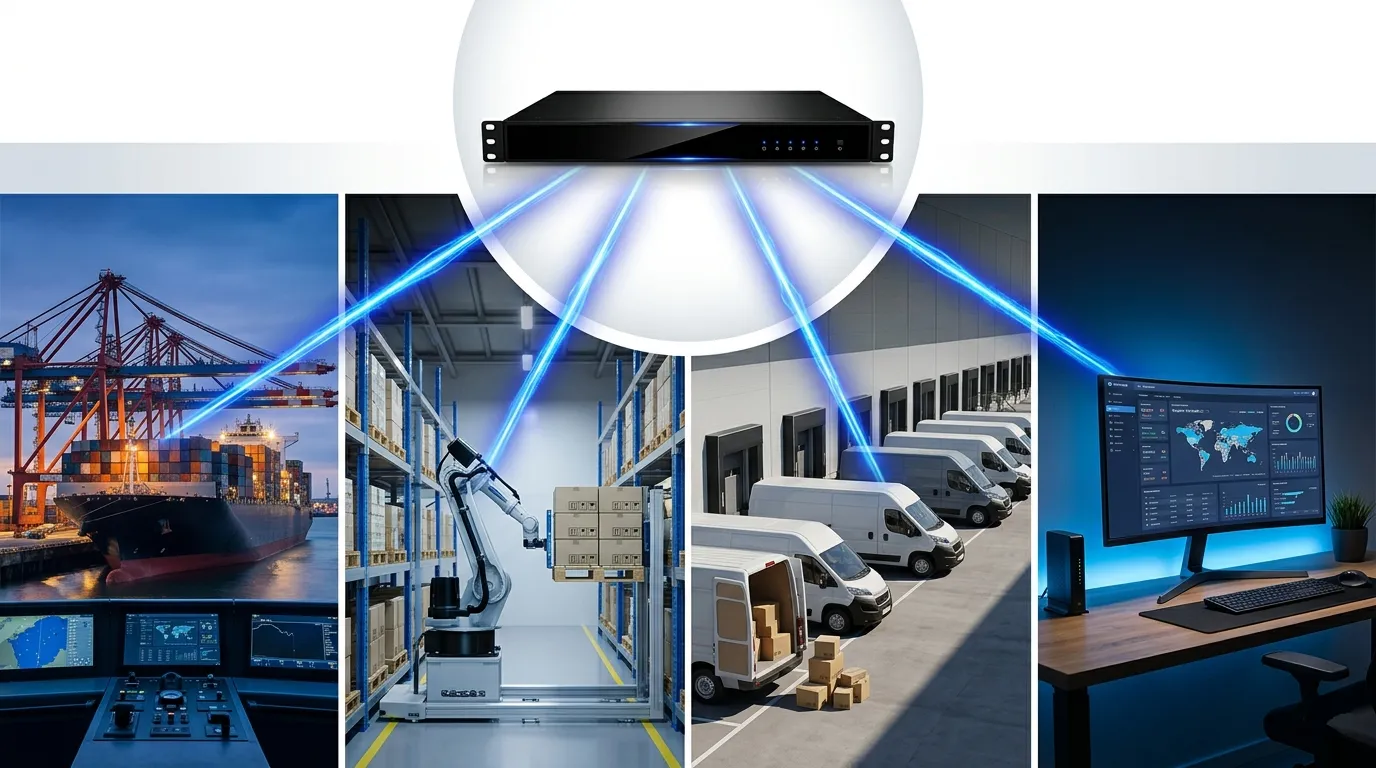
    For years, branch connectivity meant a single fixed line and a long wait whenever something went wrong. SD-WAN changes that by treating every available connection including fibre, 4G/5G, even Starlink as part of one intelligent, self-healing network.

    What SD-WAN actually does

    Instead of routing all traffic down one pipe, SD-WAN continuously measures the health of each link and steers traffic over whichever path performs best in real time.

    • Automatic failover between fibre, mobile and satellite
    • Centralised policy and monitoring across every site
    • Application-aware routing for voice and card payments

    For any business running more than a handful of locations, SD-WAN is quickly becoming the default, not the upgrade.

  • 5G vs Starlink: Choosing the Right Failover

    5G vs Starlink: Choosing the Right Failover

    A good failover connection is invisible until the day it saves you. Choosing between 5G and Starlink comes down to where you are and what you are protecting.

    When 5G wins

    • Urban and suburban sites with strong coverage
    • Lower latency for real-time applications
    • Fast, simple deployment with a single router

    When Starlink wins

    • Remote or rural locations with no reliable mobile signal
    • Construction and temporary sites
    • High-bandwidth needs where mobile data is capped

    Many Anvil customers run both 5G as the everyday backup, Starlink for true off-grid resilience.

  • 2026 5G Connectivity Trends: What to Expect Next

    2026 5G Connectivity Trends: What to Expect Next

    By 2026, “having 5G” isn’t the differentiator it was a few years ago. The conversation has shifted from basic coverage and peak download speeds to how networks behave under real conditions: congestion, mobility, indoor environments, mission-critical reliability, and the explosive growth of connected devices. In other words, 2026 is shaping up to be the year 5G becomes less of a headline and more of a platform for enterprises, developers, and operators.

    Here are the connectivity trends that are likely to define 5G in 2026, and what they mean in practice.

    1) 5G-Advanced moves from “spec” to early real-world deployments

    The biggest technical storyline is the industry’s transition into 5G-Advanced, which begins with 3GPP Release 18. Release 18 is positioned as a broad set of enhancements improving performance, efficiency, and enabling more advanced services rather than a single feature.

    What this means in 2026:

    • More focus on uplink performance (important for video, industrial sensors, and real-time collaboration)
    • Better indoor positioning and reliability improvements that support enterprise use cases
    • Increasing work around non-terrestrial networks and multi-network integration (more on that below)

    The practical takeaway: 2026 won’t be “everyone has 5G-Advanced everywhere.” It’ll be more like targeted upgrades in high-value areas (dense cities, venues, industrial zones) where operators can justify investment and where devices are ready.

    2) Standalone 5G (SA) becomes the real dividing line

    In 2026, the most meaningful question becomes: Is it 5G Standalone (SA) or not? SA is what enables many of the “real 5G” capabilities (lower latency consistency, slicing readiness, improved IoT support). Industry and operator roadmaps increasingly treat SA as the foundation for next-wave services.

    You’ll see:

    • More SA rollouts and expansions, but uneven by region
    • A stronger push to link SA investment to monetizable services (enterprise SLAs, premium experiences, fixed wireless, APIs)

    If you’re a business buyer, SA matters because it’s often correlated with whether you can get features like better QoS, more consistent latency, or modern IoT options at scale.

    3) Private 5G keeps growing but shifts from pilots to operational integration

    Private cellular has been “promising” for years. The 2026 trend is less about feasibility and more about integration into real operations: automation, analytics, security policy, and uptime requirements.

    Market watchers are seeing continued growth in private wireless, with forecasts suggesting private wireless growth rates outpacing parts of the broader RAN market, and campus networks becoming a major slice of that opportunity.

    But there’s an important nuance: private 5G isn’t universal. It’s most compelling where Wi-Fi struggles challenging RF environments, high mobility, strict reliability/security needs.

    In 2026, expect more “hybrid designs”:

    • Wi-Fi 7 for general enterprise access
    • Private 5G for specific zones (factories, ports, utilities, logistics lanes) where deterministic performance matters

    4) RedCap expands 5G into practical IoT at scale

    One of the most important 2026 trends is 5G RedCap (Reduced Capability). RedCap is designed to bridge the gap between low-power IoT and full-featured 5G devices enabling more affordable, power-efficient 5G connectivity for wearables, industrial sensors, cameras, and monitoring devices.

    Why it matters in 2026:

    • It helps 5G move beyond smartphones and routers into “everyday” enterprise devices
    • It supports large fleets of connected assets without needing the cost/complexity of full 5G modems
    • It aligns naturally with SA networks and modern device management models

    For industries like utilities, healthcare monitoring, logistics, and smart campuses, RedCap is one of the most practical “next steps” for 5G value.

    5) Fixed Wireless Access (FWA) keeps accelerating as a mainstream broadband option

    FWA has quietly become one of 5G’s strongest commercial wins: delivering home or business internet over cellular where fiber is slow, expensive, or unavailable. Industry reporting continues to highlight FWA as a major growth engine in the telecom ecosystem.

    In 2026, expect:

    • Better performance through improved spectrum use and network optimization
    • More operator bundles (mobile + broadband + services)
    • Increased use as backup connectivity for businesses and multi-site retail

    For organizations with pop-up sites, temporary projects, or remote locations, FWA is often the fastest way to get “good enough” broadband without waiting months for wired installs.

    6) Satellite + non-terrestrial networks (NTN) become a real part of the connectivity mix

    2026 is when more people start treating satellite connectivity not as a novelty, but as a design option especially for coverage gaps, remote operations, maritime/aviation, and resilience planning.

    GSMA research and industry commentary point to NTN as an area of increasing focus alongside other 5G growth vectors.
    At the standards and ecosystem level, 5G-Advanced roadmaps also highlight NTN support as part of the evolution.

    The key shift: by 2026, “cellular coverage” increasingly means a blend of terrestrial networks plus satellite augmentation, especially for continuity and critical communications.

    7) Network slicing and “service differentiation” get more practical

    Network slicing has been discussed forever. In 2026, it becomes more tangible less as a buzzword and more as a tool operators use selectively to deliver differentiated services (enterprise performance tiers, critical IoT, venue experiences).

    The reason slicing becomes more realistic is the combination of:

    • Greater SA footprint
    • Maturing automation and orchestration
    • Stronger enterprise demand for predictable performance and segmentation

    Don’t expect slicing everywhere. Expect it where there’s a clear business case: ports, factories, hospitals, large venues, transport hubs, and premium enterprise connectivity packages.

    8) AI-driven network automation becomes a core operator strategy

    By 2026, the industry is leaning hard into AI for network operations optimizing performance, reducing downtime, and managing complexity (especially as networks densify and diversify). This shows up in operator/vendor narratives around automation and “AI-native” operations, and in market outlooks linking growth to evolving workloads and always-on usage patterns.

    For customers, the benefit isn’t “AI in the network” as a concept it’s outcomes:

    • Faster fault detection and resolution
    • Better capacity planning
    • More consistent real-world performance

    9) The telco API economy continues to build

    Another 2026 trend is the push for network APIs letting developers request network capabilities programmatically (think: identity verification, quality-on-demand, device location signals, etc.). GSMA Intelligence has framed enterprise APIs and cloud-edge convergence as major themes in the industry’s near-term evolution.

    In 2026, expect more experimentation and early commercialization, especially around:

    • Fraud reduction and identity signals
    • Enterprise QoS requests (where supported)
    • Location and device insights for logistics and safety

    This is still early, but it’s a key direction: turning networks into programmable platforms, not just connectivity pipes.

    The bottom line for 2026

    2026 5G trends aren’t about a single breakthrough. They’re about maturity:

    • 5G SA becoming the real foundation
    • 5G-Advanced features arriving in targeted places
    • Private wireless becoming operational, not experimental
    • RedCap making 5G IoT more economical
    • NTN and FWA expanding what “coverage” and “broadband” mean
    • Automation and APIs shaping how networks are operated and monetized

    If you’re writing this as a business-facing piece, the best framing is: 5G in 2026 is less about speed and more about capability reliability, scale, and the ability to support new kinds of real-time work.

    Want to talk connectivity for business? Get in touch below

  • 99.99% Uptime: Business critical operations and how to ensure you are always connected

    99.99% Uptime: Business critical operations and how to ensure you are always connected

    In today’s always-on digital world, connectivity downtime is no longer just an inconvenience it’s a business risk. For IoT deployments, industrial systems, critical infrastructure, and global operations, even minutes of connectivity loss can lead to operational disruption, data gaps, safety issues, and financial loss.

    Achieving 99.99% connectivity uptime often referred to as “four nines” availability means limiting downtime to less than 53 minutes per year. While challenging, it is achievable with the right combination of architecture, technology, and operational discipline.

    This article outlines practical strategies to design, deploy, and operate connectivity solutions that consistently deliver ultra-high availability.

    From field services and logistics to IoT deployments and remote workforces, the choice between LTE and 5G can directly impact performance, cost, scalability, and long-term competitiveness. Understanding the differences and where each technology shines is key to making the right investment.

    What 99.99% Connectivity Uptime Really Means

    Before discussing how to achieve it, it’s important to understand what 99.99% uptime represents in real terms:

    • Per year: ~52.6 minutes of downtime
    • Per month: ~4.4 minutes of downtime
    • Per week: ~1 minute of downtime

    This level of availability leaves little room for error. Single points of failure, manual processes, or reactive monitoring will almost certainly prevent you from reaching this threshold.

    Ensuring 99.99% uptime requires proactive design and continuous management.

    1. Eliminate Single Points of Failure

    The fastest way to miss uptime targets is to rely on a single component network, carrier, SIM, or platform.

    To improve resilience:

    • Use redundant connectivity paths
    • Avoid dependency on a single mobile network operator
    • Design systems to fail over automatically, not manually

    In IoT and distributed systems, redundancy should exist at multiple layers:

    • Network layer
    • Device connectivity
    • Backend infrastructure
    • Power and physical access (where applicable)

    If any one component fails, another must take over seamlessly.

    2. Use Multi-Network and Multi-Carrier Connectivity

    Single-network connectivity cannot guarantee four-nines availability, especially in mobile or geographically distributed deployments.

    Multi-network SIMs and multi-carrier strategies allow devices to:

    • Automatically switch to another network if signal quality degrades
    • Avoid outages caused by local carrier failures
    • Maintain service during maintenance windows or regional disruptions

    This approach significantly reduces the impact of network-specific incidents, which are one of the most common causes of downtime.

    For critical applications, dual-SIM or dual-modem designs can provide an additional layer of resilience.

    3. Design for Intelligent Failover

    Redundancy alone is not enough failover must be intelligent, fast, and automated.

    Key principles include:

    • Real-time network quality monitoring
    • Clear thresholds for switching networks
    • Policy-based decision-making (latency, packet loss, signal strength)
    • Seamless session continuity where possible

    Failover that requires human intervention or delayed decision-making often results in unacceptable downtime. Automation is essential for meeting strict uptime targets.

    4. Monitor Connectivity in Real Time

    You cannot ensure high uptime without visibility. Continuous monitoring allows teams to detect issues before they become outages.

    Effective connectivity monitoring should include:

    • Network availability and signal quality
    • Data usage anomalies
    • Registration failures and reconnection attempts
    • Latency and packet loss trends

    Real-time dashboards, alerts, and historical analytics enable proactive intervention often resolving issues before end users or systems are affected.

    5. Build Resilience Into the Device Layer

    Connectivity uptime is influenced not only by networks, but also by device behavior.

    Best practices include:

    • Robust connection retry logic
    • Graceful handling of intermittent connectivity
    • Local buffering of data during outages
    • Edge processing to reduce dependency on constant connectivity

    Devices should be designed to survive temporary disruptions without data loss or functional failure. This is especially important in remote or mobile environments.

    6. Leverage Edge Computing and Local Decision-Making

    One of the most effective ways to improve perceived uptime is to reduce reliance on continuous cloud connectivity.

    Edge computing enables devices or gateways to:

    • Process data locally
    • Make decisions without round-trip latency
    • Continue operating during network disruptions

    By pushing intelligence closer to the device, systems can remain functional even when connectivity is degraded dramatically improving overall availability.

    7. Secure Connectivity Without Adding Friction

    Security misconfigurations are a common but overlooked cause of downtime. Expired certificates, failed authentication, or blocked connections can disrupt service just as effectively as a network outage.

    To avoid security-related downtime:

    • Automate certificate and credential lifecycle management
    • Use standardized, well-supported security protocols
    • Monitor authentication and authorization failures
    • Avoid manual configuration wherever possible

    High availability and strong security are not mutually exclusive but they must be designed together.

    8. Plan for Geographic and Regulatory Complexity

    Global deployments introduce additional risks to uptime, including:

    • Regional network variability
    • Regulatory restrictions on roaming
    • Local infrastructure differences

    Ensuring 99.99% uptime across regions requires:

    • Local network access where possible
    • Compliance with roaming and data regulations
    • Flexible provisioning models (eSIM, remote SIM management)

    A global connectivity strategy must be adaptable, not rigid.

    9. Test for Failure, Not Just Success

    Many systems work perfectly until something goes wrong.

    To achieve four-nines uptime, teams must actively test failure scenarios, including:

    • Network outages
    • Carrier degradation
    • Backend service failures
    • Power interruptions

    Regular stress testing and fault injection help validate that redundancy and failover mechanisms work as intended under real-world conditions.

    If failure modes are not tested, they will eventually be discovered in production often at the worst possible time.

    10. Establish Clear Operational Ownership

    High uptime is not just a technical challenge it’s an operational one.

    Organizations should define:

    • Clear ownership for connectivity performance
    • Escalation paths for incidents
    • Service-level objectives (SLOs) and error budgets
    • Continuous improvement processes
    • A trusted service provider who has appropriate knowledge, products and services to provide 99.99% uptime

    Without operational accountability, even well-designed systems will degrade over time.

    Conclusion

    Achieving 99.99% connectivity uptime is not about perfection it’s about resilience. By eliminating single points of failure, adopting multi-network connectivity, automating failover, and continuously monitoring performance, organizations can dramatically reduce downtime and operational risk.

    In a world where connected systems are increasingly mission-critical, high availability is no longer a luxury. It is a baseline expectation.

    Organizations that invest in resilient connectivity architectures today will be better positioned to scale, compete, and innovate tomorrow.

    Want to talk connectivity for business? Get in touch below

  • 5G vs. LTE: What Businesses Need to Know Before Upgrading

    5G vs. LTE: What Businesses Need to Know Before Upgrading

    As mobile connectivity becomes the backbone of modern business operations, organizations are increasingly asking a critical question: Is 5G worth it, or is LTE still enough?

    From field services and logistics to IoT deployments and remote workforces, the choice between LTE and 5G can directly impact performance, cost, scalability, and long-term competitiveness. Understanding the differences and where each technology shines is key to making the right investment.

    Understanding LTE and 5G at a High Level

    LTE (Long Term Evolution) has been the global standard for mobile broadband for more than a decade. It delivers reliable speeds, wide coverage, and proven stability for business applications such as mobile point-of-sale, fleet tracking, and secure remote access.

    5G, the next generation of cellular technology, builds on LTE’s foundation with dramatically higher speeds, lower latency, and the ability to connect far more devices simultaneously. While consumer use cases often dominate the conversation, the real value of 5G lies in its business and industrial potential.

    Key Differences That Matter to Businesses

    1. Speed and Bandwidth

    • LTE: Typical real-world speeds range from 10–100 Mbps.
    • 5G: Can deliver speeds exceeding 1 Gbps under optimal conditions.

    For businesses handling large data transfers, high-resolution video, or cloud-based applications, 5G can significantly reduce delays and improve productivity. However, many day-to-day applications email, ERP access, or basic telemetry continue to perform well on LTE.

    2. Latency and Real-Time Performance

    Latency refers to how quickly data travels from device to network and back.

    • LTE: Average latency of 30–50 milliseconds.
    • 5G: Latency can drop below 10 milliseconds.

    This difference is critical for real-time applications such as autonomous systems, remote equipment control, AR/VR training, and time-sensitive industrial automation. For traditional business workflows, LTE latency is often sufficient, but emerging use cases increasingly demand 5G’s responsiveness.

    3. Device Density and IoT Scalability

    5G was designed with massive IoT in mind.

    • LTE: Supports thousands of devices per square mile.
    • 5G: Supports up to one million devices per square kilometer.

    For businesses deploying sensors, smart infrastructure, or large-scale asset tracking, 5G enables growth without congestion or performance degradation. LTE remains viable for smaller or moderately sized IoT deployments.

    4. Network Reliability and Slicing

    5G introduces network slicing, allowing carriers to dedicate virtual network segments to specific applications or customers.

    This means businesses can achieve:

    • Guaranteed bandwidth
    • Predictable performance
    • Enhanced security isolation

    LTE networks are shared environments, which can experience congestion during peak usage. For mission-critical applications, 5G’s ability to prioritize traffic is a major advantage.

    Business Use Cases: LTE vs. 5G

    When LTE Still Makes Sense

    LTE remains a strong choice for many business applications, including:

    • Fleet management and telematics
    • Mobile workforce connectivity
    • Payment processing and kiosks
    • Backup WAN and failover connectivity
    • Standard IoT monitoring and telemetry

    LTE’s broad coverage, lower device costs, and mature ecosystem make it a cost-effective and dependable option.

    When 5G Delivers Clear Value

    5G is best suited for forward-looking or performance-intensive use cases such as:

    • Smart manufacturing and Industry 4.0
    • Real-time video analytics and surveillance
    • Autonomous vehicles and robotics
    • AR/VR training and remote assistance
    • High-density IoT environments
    • Private wireless networks for campuses or facilities

    In these scenarios, LTE may act as a bottleneck, while 5G enables innovation and competitive differentiation.

    Coverage and Deployment Considerations

    While 5G coverage continues to expand, it is not yet uniform across all regions. Businesses must evaluate:

    • Geographic footprint
    • Indoor vs. outdoor coverage
    • Carrier availability
    • Device compatibility

    In many cases, a hybrid approach leveraging LTE for broad coverage and 5G where available offers the best balance of performance and reliability.

    Cost and ROI Factors

    5G devices, data plans, and infrastructure can be more expensive than LTE, especially in early deployments. However, the ROI often comes from:

    • Increased operational efficiency
    • Reduced downtime
    • New revenue opportunities
    • Automation and labor savings

    Businesses should assess not just the upfront costs, but the long-term strategic value of enabling next-generation applications.

    Choosing the Right Connectivity Strategy

    The decision between LTE and 5G is not always an either-or choice. Many organizations benefit from:

    • Multi-network connectivity
    • Intelligent failover between LTE and 5G
    • Secure, managed mobile networking solutions

    At Anvil Mobile, we help businesses design and deploy mobile connectivity strategies that align with their operational goals whether that means maximizing the value of LTE, preparing for 5G, or seamlessly integrating both.

    Final Thoughts

    LTE remains a powerful and reliable technology for many business applications, while 5G opens the door to transformative capabilities that were previously out of reach. The right choice depends on your use case, performance requirements, budget, and growth plans.

    As mobile connectivity continues to evolve, businesses that take a strategic, informed approach will be best positioned to scale securely and efficiently today and into the future.

    Want to talk connectivity for business? Get in touch below

  • Managed IoT Connectivity: Build vs Buy (and What It Means for Your Next Deployment)

    Managed IoT Connectivity: Build vs Buy (and What It Means for Your Next Deployment)

    Connected products live or die on something most teams don’t demo at launch events: connectivity. Your devices can have brilliant hardware, elegant firmware, and a polished cloud application yet still fail in the field because roaming breaks, SIMs can’t be managed at scale, billing is chaotic, or coverage assumptions were wrong.

    That’s why more organizations are moving from “we’ll figure out SIMs later” to managed IoT connectivity as a core part of their product strategy. The big question becomes: Do you build your own connectivity stack, or buy it as a managed service?

    Below is a practical, decision-focused guide for teams evaluating Build vs Buy with examples, hidden costs, and a few suggested services from Anvil Mobile.

    What “Managed IoT Connectivity” Actually Includes

    Connectivity is not just “a SIM with a data plan.” In modern deployments, managed IoT connectivity typically bundles:

    • Multi-network coverage & roaming (often via multiple carrier relationships)
    • SIM / eSIM lifecycle management (provisioning, activations, suspensions, replacements)
    • Centralized management portal & APIs (usage, status, alerts, automation)
    • Rate plans optimized for IoT (pooled data, low-usage devices, burst scenarios)
    • Security controls (private APN, IP allowlists, VPN integrations, IMEI lock, etc.)
    • Diagnostics & support (why is this device offline? which network is it on?)
    • Billing & reconciliation (one view across regions, currencies, and carriers)
    • Compliance & operational processes (KYC, local regulations, shipping constraints)

    If your roadmap includes scaling from pilot to thousands (or millions) of devices, these capabilities stop being “nice to have” and become the work.

    The “Build” Path: Owning the Connectivity Layer

    When companies say “build,” they usually mean assembling connectivity through direct carrier contracts and stitching together systems to operate it.

    What building typically looks like

    • Negotiating contracts with one or more carriers (per region)
    • Managing SIM procurement, warehousing, and shipment logistics
    • Implementing provisioning workflows and internal tooling
    • Building dashboards (or integrating carrier portals often multiple)
    • Creating alerts and automation around usage, offline events, and throttling
    • Handling support escalations and troubleshooting with carriers
    • Managing invoicing across carriers and geographies

    Why teams choose to build

    • Absolute control over contract terms, routing, and data policies
    • Highly specific requirements (e.g., regulated environments, private network constraints)
    • Massive scale where savings can justify internal operating cost
    • A strategic belief that connectivity is a competitive differentiator

    The hidden cost: your ops team becomes a carrier interface

    The connectivity layer has a lot of “unplanned work”:

    • Carrier portal inconsistencies, changing policies, and manual steps
    • Edge cases in roaming behavior (especially cross-border)
    • Different diagnostics and terminology per operator
    • Support tickets that bounce between your team and the carrier
    • Device behavior differences by geography and radio conditions

    For many organizations, this turns into a quiet tax: you need internal expertise across telecom operations, roaming, procurement, billing, and security not just engineers.

    The “Buy” Path: Managed Connectivity as a Service

    “Buying” means choosing a managed IoT connectivity provider that already has the carrier relationships, platform tooling, and support model in place.

    What buying typically looks like

    • One commercial relationship (instead of many)
    • A single portal and API for device/SIM lifecycle actions
    • Multi-network coverage built into the product
    • Support that’s used to debugging IoT connectivity issues
    • Consolidated billing and reporting
    • Optional security add-ons (private APN, static IP, VPN, etc.)

    Why teams choose to buy

    • Speed to deployment: move from pilot to scale without building tooling
    • Predictable operations: fewer “telecom mysteries” to debug internally
    • Global scale: easier multi-region rollouts with consistent management
    • Better resilience: multi-network options can reduce single-carrier risk

    A good managed service also helps you make fewer early mistakes like picking a consumer-like mobile plan that looks cheap in the pilot but becomes financially painful at scale.

    Build vs Buy: The Questions That Decide It

    If you only take one thing from this article, take this: the right choice depends less on engineering capability and more on operational maturity and scale.

    Here are the deciding questions.

    1) How many regions will you operate in within 12–24 months?

    • One region, stable footprint: building is more plausible.
    • Multiple regions: buying usually wins, because global carrier management gets complex fast.

    2) Is connectivity a differentiator or just a dependency?

    If your advantage is “our device works in more places with fewer outages,” then connectivity is strategic. If your advantage is the product itself, buying keeps you focused.

    3) What is your tolerance for downtime and support escalation cycles?

    If outages create safety risk, SLA penalties, or customer churn, then the ability to troubleshoot quickly and fail over networks matters. Many teams buy because they want a mature support model.

    4) Do you need advanced security controls?

    Private networking, static IPs, VPN, strict access control, and compliance needs can push you either way:

    • Some managed providers offer strong security options out of the box.
    • Some regulated environments require building around strict internal policies.

    5) What does “total cost” mean for you?

    Compare total cost of ownership, not the data rate alone. Include:

    • Headcount and on-call burden
    • Carrier negotiations and renewals
    • Tooling development and maintenance
    • Support escalation time
    • Billing reconciliation overhead
    • Lost time in debugging and shipment mistakes

    A “cheap” plan can become expensive if it creates operational drag.

    A Simple Rule of Thumb

    Buy if:

    • You’re moving from pilot to production and want to scale quickly
    • You want predictable operations with one platform
    • You need global coverage and roaming without complex contracts
    • You’d rather invest engineering time in product features than telecom tooling

    Build if:

    • You operate at very large scale with a dedicated telecom ops function
    • You have unusual constraints that managed providers can’t meet
    • You’re willing to carry the operational load long-term
    • You can negotiate carrier terms that truly change unit economics

    Most teams start by buying, then selectively build pieces later once they have scale and real data about what they actually need.

    Common Hybrid Approach: Buy Now, Build Selectively Later

    A practical middle ground is to buy managed connectivity but keep a pathway open to deeper control:

    • Use APIs to integrate connectivity events into your ops tooling
    • Standardize device identity and provisioning workflows
    • Design your firmware to handle network variability and failover
    • Keep metrics that quantify downtime and roaming issues by region

    This keeps your early-stage risk lower while preserving optionality.

    Closing Thought: Connectivity Is a Product Decision

    Connectivity is one of the few parts of an IoT system that touches every stage: manufacturing, logistics, activation, operations, support, and billing. The Build vs Buy decision isn’t just procurement it shapes how fast you can ship, how reliably you can scale, and how much operational noise your team will absorb.

    If you’re designing for real-world deployments (not just demos), managed connectivity often gives you the fastest route to reliability. Building can make sense but only when you’re ready to run connectivity like a business function, not a side quest.

    Want to talk connectivity for business? Get in touch below

  • What Is Business-Grade 5G Connectivity and Why It Matters

    What Is Business-Grade 5G Connectivity and Why It Matters

    5G has been marketed as the next big leap in wireless faster speeds, lower latency, and the ability to connect more devices than ever. But for many organizations, the more useful question isn’t “Do we have 5G?” It’s “Do we have business-grade 5G?” Because there’s a real difference between consumer 5G on a smartphone plan and a connectivity service designed to keep operations running, protect sensitive data, and scale as your needs grow.

    Business-grade 5G connectivity is essentially 5G built for reliability, control, and performance consistency often wrapped in service guarantees, security features, and enterprise management tools. It matters because connectivity is no longer just an IT utility; it’s the backbone of sales systems, supply chains, customer experiences, and increasingly, real-time automation.

    Business-grade 5G, explained in plain language

    Consumer 5G is designed to give large numbers of people a good mobile internet experience: video streaming, social apps, games, and everyday browsing. It can be fast, but it’s not necessarily predictable. Performance may vary dramatically depending on location, congestion, time of day, or network prioritization.

    Business-grade 5G is designed around different priorities:

    • Predictable performance rather than “best effort” connectivity
    • Higher reliability and uptime, often supported by service-level agreements (SLAs)
    • Stronger security controls suitable for regulated or sensitive environments
    • Centralized management for devices, SIMs/eSIMs, usage, and policies
    • Network features that support mission-critical applications, like low-latency workloads, large-scale IoT, or real-time monitoring

    Think of it like the difference between using a free email account and running a company email system with admin controls, compliance tools, and support. Both send messages, but one is built for accountability and scale.

    The key ingredients of business-grade 5G

    Not every “business 5G plan” automatically qualifies as business-grade. True business-grade offerings typically combine multiple technical and operational features.

    1) Priority and quality of service (QoS)

    On a crowded network say, at a stadium, in a city center, or during a major event consumer traffic may compete for the same resources. Business-grade services can offer traffic prioritization or quality-of-service policies that keep critical applications responsive.

    For example, a field service team relying on video calls and digital work orders needs steady performance. If their connection drops every time the local area gets busy, productivity suffers immediately.

    2) Low latency and consistent responsiveness

    Speed headlines focus on “gigabit 5G,” but many business use cases care more about latency how quickly data gets from device to server and back. Lower latency supports:

    • Real-time inventory updates
    • Remote assistance and augmented reality (AR)
    • Smart factory automation
    • Telemetry and monitoring systems
    • Interactive customer experiences

    Business-grade 5G is often paired with network configurations that reduce jitter (inconsistent latency) so performance feels stable rather than spiky.

    3) Security designed for enterprise risk

    Security is where the gap between consumer and business-grade can become stark. Business-grade 5G solutions may include:

    • Private APNs or secure gateways to isolate traffic
    • VPN integration and identity-driven access controls
    • Device authentication and certificate management
    • SIM/eSIM-based security, reducing reliance on shared Wi-Fi passwords
    • Zero trust alignment, where access is continuously verified

    This matters because many businesses now connect far more than laptops and phones. They connect cameras, scanners, sensors, kiosks, industrial machines, and vehicles each a potential entry point if not managed carefully.

    4) Private 5G options for full control

    One of the most powerful enterprise capabilities is private 5G: a dedicated cellular network for a campus, factory, warehouse, port, hospital, or large venue. Private 5G can deliver:

    • Controlled coverage in specific areas
    • Stronger security boundaries
    • Tailored performance for operational tech (OT) and IoT
    • Integration with on-prem systems and edge computing

    If you run a facility where downtime is expensive and Wi-Fi is unreliable think manufacturing floors with interference, or logistics hubs with constant motion private 5G can be a step-change.

    5) Network slicing for “multiple networks” on one infrastructure

    In many modern deployments, operators can create network slices virtual sections of a 5G network with specific performance and security characteristics. A business might use one slice for point-of-sale transactions, another for guest connectivity, and another for IoT sensors.

    The advantage is separation and predictability without building three separate physical networks.

    6) Centralized visibility and lifecycle management

    Business-grade connectivity is as much about management as it is about radio technology. Enterprise offerings typically provide portals and APIs that let you:

    • Provision and deactivate SIMs/eSIMs instantly
    • Track usage by device, department, or location
    • Set data policies and alerts
    • Manage fleets of connected devices (MDM/EMM integration)
    • Troubleshoot faster with better diagnostics

    For organizations scaling from 50 devices to 5,000, these tools can be the difference between control and chaos.

    Why business-grade 5G matters now

    It’s tempting to treat connectivity as a commodity until something breaks. But the role of networks has changed. Businesses increasingly run on real-time systems, distributed teams, and connected devices. Here are the big reasons business-grade 5G is becoming essential.

    1) It reduces downtime and operational friction

    When your payment terminals, dispatch apps, inventory systems, or customer service tools depend on stable connectivity, every outage or slowdown has a direct cost. Business-grade 5G can add resilience through:

    • Better coverage and mobility than Wi-Fi alone
    • Cellular failover for fixed sites (backup internet)
    • Prioritization and managed service support

    For multi-site retail, pop-up locations, or construction projects, 5G can also reduce the time and complexity of getting new locations online.

    2) It supports hybrid work beyond the office

    Hybrid work isn’t just video calls. It’s secure access to internal systems, large file transfers, collaboration tools, and consistent performance on the move. Business-grade 5G can offer a smoother experience for teams that work in the field, travel frequently, or operate from temporary sites.

    3) It unlocks scalable IoT and edge computing

    The number of connected devices in business environments is exploding sensors, cameras, trackers, smart meters, wearables, and more. Business-grade 5G is built to handle high device density and can pair well with edge computing, processing data close to where it’s created to reduce latency and bandwidth costs.

    Use cases include predictive maintenance, real-time safety monitoring, and automated quality inspection all of which depend on fast, reliable data flows.

    4) It improves customer experiences

    Customers notice when systems lag. Whether it’s slow checkout, delayed service dispatch, or unreliable in-venue experiences, connectivity influences brand perception. High-performance 5G can enable:

    • Faster point-of-sale transactions
    • Interactive in-store displays
    • Real-time personalization
    • Better queue management and staffing optimization

    When customer expectations are shaped by instant digital experiences, reliable connectivity becomes part of the product.

    5) It’s a strategic layer for digital transformation

    Many digital transformation initiatives fail not because the software is bad, but because the infrastructure can’t support it consistently. Business-grade 5G provides a flexible connectivity layer that can be deployed faster than fiber in many scenarios, scaled across regions, and managed centrally.

    It becomes a platform: not just “internet access,” but an enabler for automation, analytics, and new operating models.

    How to tell if you actually need business-grade 5G

    Not every organization needs private 5G or network slicing. But many can benefit from a business-grade approach if:

    • You run mission-critical apps in the field or across many sites
    • Your environment makes Wi-Fi unreliable (interference, mobility, large areas)
    • You manage hundreds or thousands of connected devices
    • You have strict security or compliance requirements
    • Downtime has a measurable cost in revenue, safety, or service levels

    A practical starting point is to identify your most connectivity-dependent workflows and ask: What happens if this slows down for 15 minutes? For an hour? If the answer is “we lose money” or “we lose control,” it’s time to think beyond consumer-grade connectivity.

    The bottom line

    Business-grade 5G connectivity isn’t just “faster mobile internet.” It’s a more reliable, secure, and manageable way to connect people, places, and things often with guarantees and advanced network capabilities that consumer plans don’t provide. As organizations become more distributed and more automated, the network is no longer a background detail. It’s a competitive advantage.

    If you’re investing in cloud systems, IoT, field operations, or next-generation customer experiences, business-grade 5G can be the difference between a pilot that looks impressive and a rollout that actually works.

    Want to talk 5G for business? Get in touch below

  • Secure IoT Connectivity for First Responders: Ensuring Critical Medical Communication

    Secure IoT Connectivity for First Responders: Ensuring Critical Medical Communication

    Our customer operates as a first aid responder, playing a critical role in society providing immediate care to people during emergencies. They need secure connectivity to be able to transmit vital medical information to ambulances swiftly and efficiently.

    Connectivity Challenges in High-Stakes Situations

    • They need a simple one sim solution which is easy to deploy.
    • With operations spreading across many locations, they need to be able to always be connected – to have communication with the first aid responder.
    • They need secure and reliable connectivity as they are dealing with sensitive data and issues across various locations.

    Secure IoT Connectivity for First Responders: Ensuring Critical Medical Communication

    Secure Fixed IP Connectivity:  We supplied our customer with robust IoT connectivity that provides secure data.  The deployment of secure fixed IP connectivity ensures a stable and protected two-way connection between the first responder and ambulances, transmitting sensitive medical information quickly and effectively.  This feature enhances data security and reliability during emergency situations.

    Multi-Network Functionality:  By utilising IoT SIMs with multi-network functionality, the first responder organisation can sustain connectivity across different networks, ensuring seamless communication and data transmission irrespective of the operational location.

    Bespoke Tariffs:  We provided our customer with a tailored tariff by taking time to understand their needs and usage requirements thus providing a cost-effective solution together with resource efficiency.

    Management Portal: by providing our client with access to a management portal they can monitor and make changes to their SIMs over the air.

    The combination of tailored tariff structures, secure connectivity solutions and versatile multi-network capabilities empowers our client to coordinate critical medical information efficiently providing life-saving assistance in the UK.

  • IoT Connectivity in EV chargers

    IoT Connectivity in EV chargers

    As the adoption of IoT continues to grow globally, we are moving towards an era of heightened connectivity; one of the latest industries to adopt IoT is electric vehicle (EV) charging. The surge in EV charging stations has played a significant role in driving the adoption of electric cars.

    Rising concerns about carbon dioxide emissions, energy conservation, and the sustainability of fossil fuels, EVs are becoming increasingly common worldwide. As the market expands, so does the demand for smart charging stations. Currently, many EV charging stations are decentralised/non- networked chargers and structurally complex, making them challenging for on-site personnel to manage and maintain. In this blog, we’ll explore the advantages of IoT, discuss why connected EV chargers represent the future, and explain how they simplify the management of your EV charging stations.

    Problems faced with decentralised/non-networked chargers

    The genuine challenge lies not in the installation of numerous charging stations but in the capability to manage and operate these dispersed devices efficiently. Managing decentralised/non-networked EV chargers comes with its own set of unique challenges. High maintenance costs are often associated with field visits needed for troubleshooting charge points. This is not just a financial concern every minute of downtime translates into lost business and customer dissatisfaction, making efficiency and reliability key.

    Role of connectivity in the EV charging ecosystem

    EV chargers need the “always-on” solution for several key reasons. Firstly, this type of connectivity ensures that EV chargers are always accessible and ready to serve customers, enhancing user experience and increasing usage rates. Secondly, it allows for real-time monitoring and management of the charging units. This includes tracking their performance, conducting remote diagnostics, executing software updates, and troubleshooting issues promptly, which can significantly reduce downtime and maintenance costs and offer the capability for third-party companies to collect important demographic details.

    These details can range from identifying who is charging their vehicle, pinpointing the time of the day when charging occurs, to noting the type of car being charged. Such information is invaluable in tailoring services and solutions to serve the EV charging community better. Lastly, it provides for the swift processing of payments and immediate updating of customer usage data, ensuring seamless and efficient transactions. It also triggers instant alerts in any disruptions such as power outages or system malfunctions, thereby improving response times and overall system dependability, maximising EV charging operations’ efficiency, reliability, and profitability.

    Multi-network connectivity is crucial in the Electric Vehicle (EV) charging landscape. It ensures uninterrupted network coverage by automatically switching between networks based on the strength of signals. This technology is instrumental.

    Why security is so important

    Security for IoT SIMs in Electric Vehicle (EV) chargers is paramount. IoT SIMs, which provide the cellular connectivity for these chargers, handle a significant amount of sensitive data. This includes customer details, payment information, and technical data about the charging process. If this information falls into the wrong hands due to inadequate security, it could lead to serious consequences such as financial loss, identity theft, or even sabotage of the charging infrastructure. Furthermore, secure IoT SIMs ensure the reliable operation of EV chargers by protecting them from potential cyber-attacks that could disrupt their functionality, leading to downtime and loss of revenue. They also allow for secure remote management of the chargers, enabling real-time monitoring, software updates, and troubleshooting. In essence, security for IoT SIMs is essential in maintaining the integrity, reliability, and trustworthiness of EV charging systems.

    To bolster security, we advise for organisations to use Fixed IP SIMs for connectivity. Fixed IP SIMs provide secure, direct, two-way communication between chargers and management systems, making each charger uniquely identifiable on the network. This simplifies remote troubleshooting and maintenance tasks, reduces downtime, and enhances operational efficiency. Fixed IPs also allow for stringent security measures, like firewalls and secure VPN tunnels, protecting sensitive data against cyber threats. To further bolster security, Anvil advises organizations to reinforce their EV charger connection within their own VPN, creating secure networks that link directly from our data center to your charging unit. By assigning each SIM card a Fixed Static Private IP address and incorporating a firewall, we ensure users access only approved internet services

    Here at Anvil we are connecting EV chargers by providing secure Cellular IoT network connectivity and infrastructure contact us below to see how we could help you connect your EV charger

  • Why Choose Anvil for Your IoT Hardware?

    Why Choose Anvil for Your IoT Hardware?

    We are a UK-based provider of IoT connectivity solutions, specialising in IoT hardware, SD-WAN technology, and mobile connectivity services. With a focus on delivering high-performance, secure, and scalable solutions, we offer a wide range of products, including 4G and 5G IoT routers, IoT SIM cards, and SD-WAN devices, all designed to ensure reliable and uninterrupted connectivity, whatever your use case.

    What to look for when deciding on hardware

    When searching for IoT hardware solutions, several key factors must be considered to ensure you choose the right connectivity for your needs. First is what connectivity your hardware is for. For example, if you buy a 3G router, you won’t be able to use it that much as networks are beginning to sunset 2G & 3G connectivity. coverage is essential make sure the network is available where you plan to deploy. Bandwidth is another critical aspect, as the solution must be able to handle the volume and types of data your devices will transmit. Power consumption should be considered as well, particularly for battery-powered devices, to ensure efficient operation. Cost is always a factor, including the need to maintain infrastructure and the expenses associated with data usage. Data throughput is important, too, as the network must support the required data capabilities. Mobility should also be evaluated, ensuring that your devices can operate while on the move and at the speeds you need. Don’t forget latency low delay is crucial for many IoT applications. Another thing to consider is whether your device is needed indoors or outdoors, especially for environments like basements or metal buildings where signal strength can be affected. Security is vital, so ensure the network provides strong protection against misuse and unauthorised access. Finally, look into redundancy options to ensure backup connectivity in case of network failures, keeping your devices up and running at all times.

    What is an IoT Router?

    An IoT router is a specialised piece of hardware that facilitates communication between IoT devices and the broader internet or private networks. These routers are designed to handle the unique requirements of IoT devices, such as managing large amounts of data traffic, ensuring secure connections, and supporting various communication protocols. An IoT router acts as a bridge, directing traffic between devices and ensuring data is transmitted efficiently, securely, and with minimal latency.

    An IoT router is essential for businesses looking to scale their IoT infrastructure. It ensures that devices can communicate effectively over long distances, even in remote areas, and allows organisations to centralise data management for analysis and decision-making. With the right IoT router, businesses can unlock new efficiencies and improve the overall performance of their IoT ecosystem.

    What is a 5G IoT Module?

    A 5G IoT module is a small device that helps connect things like sensors, machines, or devices to the internet. It allows the hardware to send and receive data, making them “smart” and able to communicate with other devices or systems. For example, an IoT module could enable a smart thermostat to send temperature information to your phone or let a fridge report its temperature to a maintenance team. These modules are essential for making everyday objects part of the (IoT).

    What is SD-WAN?

    Software-Defined Wide Area Networking (SD-WAN) is a modern network solution that helps businesses simplify, optimise, and secure their wide area networks (WAN). SD-WAN enables businesses to bond various types of connectivity, such as traditional wired broadband, 4G, 5G, satellite, and wireless, into one unified connection. This flexibility allows businesses to prioritise reliable, high-performance connections across multiple locations, ensuring smooth operations. Additionally, SD-WAN offers failover, automatically switching to a backup connection if the primary one fails, ensuring continuous connectivity and minimal downtime.

    Reliability and Durability

    Reliability and durability are paramount when it comes to IoT hardware. IoT devices are often deployed in environments where conditions can be harsh, including extreme temperatures, humidity, and exposure to dust or vibrations. For IoT networks to function effectively, the hardware needs to be able to withstand these conditions without failure.

    Anvil understands the importance of building products that are not only high-performing but also resilient. The company’s IoT hardware solutions are engineered with durability, ensuring they can operate in challenging environments without compromising performance. Whether you’re deploying IoT devices in the industrial, automotive, healthcare, or agricultural sectors, Anvil’s hardware is designed to meet the toughest requirements and ensure that your IoT network remains operational and reliable.

    Whether you’re looking for an IoT router, 5G IoT module, or SD-WAN solution, Anvil offers a wide array of IoT hardware products; we have you covered with a diverse range of cutting-edge products. Contact us below, and one of our in-team experts will be happy to help you