Author: Franc

  • What is 5G and how does it benefit IoT?

    What is 5G and how does it benefit IoT?

    At its core, 5G is the fifth generation of wireless technology, designed to provide faster speeds, lower latency, and the ability to support an exponentially greater number of connected devices than its predecessors. 5G is built to deliver ultra-fast data transfer rates, reduced communication delays, and massive device connectivity all crucial for the effective operation of IoT systems.

    For IoT, 5G is the enabler that will bring smarter, more efficient, and more responsive systems to life. Whether connected cars, smart cities, health monitoring, or factory automation, 5G’s advanced capabilities will provide the infrastructure needed to take IoT to the next level. As IoT continues to shape industries, the introduction of 5G promises faster, more reliable, and highly efficient connectivity that will expand the possibilities for IoT applications across the globe, including in the UK.

    Why is 5G needed in IoT?

    As the world adopts IoT, it’s become a strain on 4G network infrastructure, which is why the introduction of 5G.The fusion of the Internet of Things (IoT) and 5G is essential to meet the increasing demands for a network that is both reliable and capable of handling large amounts of data with low latency. As industries worldwide adopt IoT technology, the need for high-speed, efficient, and scalable network solutions becomes more pressing. 5G addresses these challenges by providing the infrastructure necessary to support the expanding IoT ecosystem, especially in sectors that require high-capacity and low-latency communication. One of the key reasons 5G is needed for IoT is its ability to support high device density. IoT networks often involve connecting thousands, or even millions, of devices, which presents a significant challenge for older technologies like 4G. 5G can support up to one million devices per square kilometre, compared to 4G’s 100,000 devices per square kilometre. It is ideal for environments such as smart cities, factories, and large-scale industrial applications where numerous devices must be connected and managed simultaneously.

    In addition, 5G delivers low latency, which is crucial for time-sensitive IoT applications like remote healthcare, autonomous vehicles, and industrial automation. While 4G typically experiences 30-50 milliseconds latency, 5G can reduce this to just one millisecond, ensuring near-instantaneous data transfer for real-time decision-making. Furthermore, 5G offers enhanced reliability, providing a more stable and resilient network connection, essential for critical IoT applications in healthcare, safety, and industrial environments. Any network interruption could lead to safety risks or operational disruptions. Finally, 5 G’s massive bandwidth supports data-heavy IoT applications like video surveillance and smart grids. With speeds up to 10 Gbps, 5G ensures efficient data transfer, enabling businesses to process and analyse large volumes of data without bottlenecks. In summary, 5G is set to unlock the full potential of IoT by enabling faster, more reliable, and scalable connectivity for a wide range of applications.

    What’s the Difference Between 4G IoT and 5G?

    The differences between 4G and 5G in IoT are significant, particularly regarding speed, capacity, and reliability. 5G is more energy-efficient than 4G, making it ideal for IoT devices that require long battery life. With 5G, devices can consume less power while maintaining high performance, extending the operational life of IoT devices. Below are some key distinctions between the two technologies:

    As 5G networks continue to roll out, integrating IoT and 5G will redefine how industries operate. The speed, reliability, and scalability offered by 5G make it an essential technology for the future of IoT. Here an Anvil we have a wide array of connectivity solutions which ready to deploy for your operations, fill in the form below and we will be in touch soon!

  • Why SD-WAN PRO is Perfect for Bonding and Failover

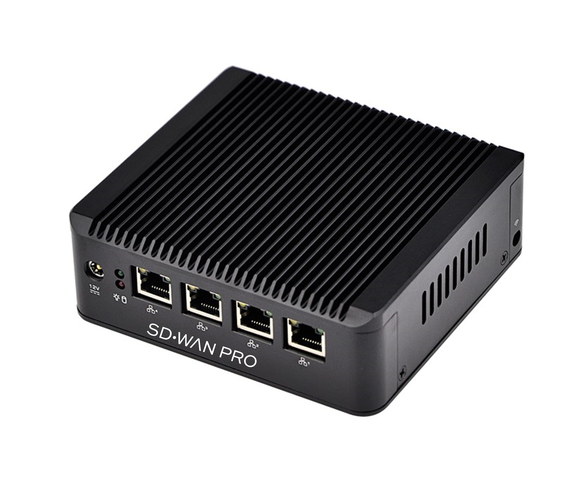
    Why SD-WAN PRO is Perfect for Bonding and Failover

    Businesses are more reliant than ever on stable and uninterrupted internet connectivity. A consistent and high-performance internet connection is crucial for maintaining operations for remote office work, cloud-based applications, or real-time communications. Let’s explore why SD-WAN PRO is the perfect solution for businesses seeking bonding and failover connectivity.

    What is SD-WAN?

    Software-Defined Wide Area Networking (SD-WAN) is an advanced network architecture that enables businesses to simplify, optimise, and secure their wide area network (WAN). SD-WAN allows businesses to combine different types of internet connections, such as traditional wired broadband, 4G, 5G, satellite, and even wireless, into a single, unified service. This flexibility allows businesses to prioritise reliable, high-performance connections while maintaining seamless operations across multiple locations.

    Anvil Mobile’s SD-WAN PRO leverages this powerful technology to provide businesses with a comprehensive solution that ensures bonding and failover capabilities. By integrating these features, SD-WAN PRO ensures businesses experience minimal disruption, even in the event of an internet connection failure.

    How Failover Works with SD-WAN PRO

    Failover is a critical feature for businesses that cannot afford downtime due to internet failures. Traditional internet backup solutions, such as 4G/5G routers, offer a basic failover mechanism. In this approach, when the primary broadband connection goes down, a backup 4G or 5G router can be used to maintain internet connectivity. However, these solutions can have limitations, such as using different IP addresses, which can disrupt services like remote access, VPNs, VoIP telephony, and CCTV systems.

    Anvil Mobile’s SD-WAN PRO addresses these limitations by unifying multiple internet services under a single IPv4 IP address. When one connection fails, the SD-WAN solution automatically switches to the next available connection, ensuring the business stays online. The unique feature here is that the public IP address remains the same, meaning there is no disruption to remote access, VPNs, or VoIP services, making it a truly uninterrupted experience.

    This failover solution provides unparalleled reliability, keeping businesses connected even in the face of network failures. The SD-WAN PRO ensures a seamless switch between different internet connections, whether a 4G router, 5G mobile broadband, or traditional broadband, without causing downtime or performance issues.

    How Bonding Works with SD-WAN PRO

    Bonding is another powerful feature of SD-WAN PRO that sets it apart from traditional internet backup solutions. Bonding allows businesses to combine multiple internet connections. This approach is ideal for businesses that require high-speed internet and cannot afford the disruptions caused by congestion or connection failures.

    With SD-WAN PRO, the multiple internet services including 5G, 4G, and broadband are bonded together, enabling businesses to utilise the combined bandwidth of all the connections. This results in faster, more reliable internet speeds, making it perfect for high-demand applications such as media streaming, large-scale events, and point-of-sale (POS) systems at gatherings where high traffic can strain a single internet connection.

    The bonding feature is handy for businesses in industries like retail, media, or large-scale events, where reliable, high-speed internet is necessary to support many users. Whether it’s ensuring robust internet connectivity for a live-streamed event or maintaining continuous POS transaction processing at a busy venue, SD-WAN PRO ensures that businesses have a reliable internet connection, no matter the circumstances.

    Anvil Mobile’s SD-WAN PRO solution is designed to meet the demands of modern businesses, offering high-performance bonding and reliable failover solutions. Whether you’re running a small business or a large-scale enterprise, contact us below today and discover how it can optimise your business’s internet infrastructure.

  • SIMs for Tracking Devices in  Taxi Fleets

    SIMs for Tracking Devices in  Taxi Fleets

    Our client is a leading taxi company providing comprehensive taxi services across the UK.  With a focus on efficiency and customer satisfaction, the company sought innovative solutions to enhance the monitoring and control of their extensive fleet of vehicles.

    Problem

    Before integrating IoT solutions, our customer encountered significant challenges in managing their taxi fleet effectively.  The lack of robust connectivity hindered their ability to monitor and control where all their cars were, leaving them vulnerable to operational inefficiencies and security risks.  Additionally, there was an absence of real-time insights into vehicle performance, such as speed, fuel efficiency, and location.

    IoT solution for Fleet Management

    To address the connectivity issues, we provided our customer with multi-network SIM cards, providing uninterrupted data and smooth access across various networks.  Additionally, the SIM had SMS enabled, allowing SMS commands to be sent to the trackers.  Our SIMs made remote access and real-time monitoring possibletwo necessities for effective fleet management.  It also addressed security issues by enabling remote vehicle access and control, facilitating quick reactions to security incidents like theft, and enhancing operational resilience.  Insights for proactive decision-making and effective route planning were obtained through real-time vehicle speed monitoring, location, and performance.  This greatly increased operational efficiency and streamlined their fleet management procedures, setting new benchmarks for excellence in the UK taxi service sector.  Having access to a SIM management portal also makes it easier to manage all of their SIMs in one centralised platform.

    For more information on how IoT can transform your fleet management operations, don’t hesitate to contact us below.

  • Multi-Network SIMs for Mobile Sandwich Van

    Multi-Network SIMs for Mobile Sandwich Van

    Our customer operates several mobile pop-up sandwich vans with numerous routes, bringing breakfast, lunch, and snacks to building sites, factories, offices, and business parks. To facilitate seamless card transactions, they require connectivity to enable card payment processing using mobile POS terminal

    Problem

    Inconsistent network coverage across various locations poses a challenge for the mobile sandwich vans in processing card payments efficiently and it was leading to a loss in sales and poor customer service. The customer needs the ability to accept card payments using a POS terminal; however, relying on single-network SIMs is not practical as the vans operate over an extensive area and the mobile signal is not consistent from any one network.

    Solution

    Multi-network SIMs are essential for ensuring connectivity reliability across different areas. Our client required a straightforward IoT solution, and the use of multi-network SIMseffectively met the connectivity requirements of the mobile sandwich company. This enables smooth card payment processing at diverse events and locations, offering versatile connectivity options to ensure seamless completion of all financial transactions.  Additionally we were able to offer our customer aggregation of the data. This helped reduce the cost of the connectivity as the data from all the SIMs could be accessed by all the SIMs.

    By using multi-network SIMs, our customer has an improved reputation and have branched out to new locations with confidence, knowing that they have operational flexibility for their business on the go. Contact us for more information or to get started with a connectivity solution that suits your needs!