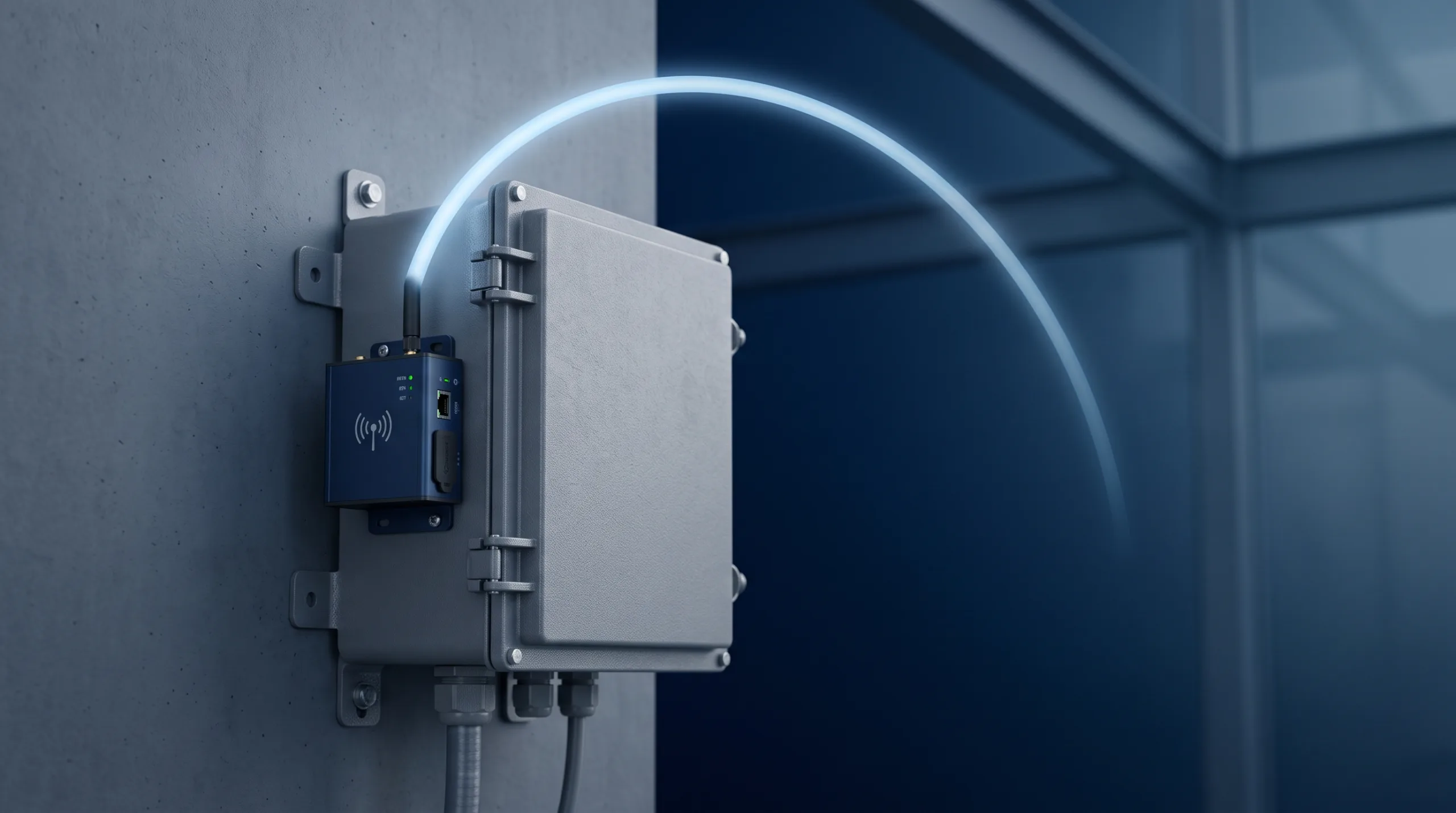
What is SGP.32?
SGP.32 is the GSMA’s specification for IoT Remote SIM Provisioning (RSP).
It defines how eSIM-enabled IoT devices securely download, activate and manage mobile network profiles without requiring physical access to the SIM card.
The standard introduces a simpler, more scalable architecture that reflects the needs of modern IoT deployments, where devices may remain in the field for many years and operate across multiple countries.
Rather than relying on manual SIM replacements or complex provisioning processes, organisations can remotely manage connectivity throughout the device lifecycle. Unlike previous eSIM standards, SGP.32 has been built around the practical requirements of enterprise IoT, making it easier to deploy, manage and switch network profiles throughout the lifetime of a device.
Why was SGP.32 developed?
Earlier eSIM specifications were developed for different markets.
SGP.02 focused primarily on Machine-to-Machine (M2M) deployments, where connectivity management often required significant integration work between mobile operators and SIM management platforms.
While effective for large-scale projects, it introduced complexity that could create barriers for organisations wanting greater flexibility.
SGP.22 was developed for consumer devices such as smartphones, tablets and smartwatches. It simplified profile downloads for consumers but wasn’t designed around the operational requirements of enterprise IoT.
SGP.32 bridges this gap.
It combines the flexibility expected from consumer eSIM technology with the scalability and lifecycle management required for industrial IoT, connected vehicles, utilities and enterprise deployments.
How does SGP.32 work?
At the centre of SGP.32 is the concept of remote profile management.
Instead of permanently assigning a device to a single mobile network, the eSIM securely stores operator profiles that can be activated, replaced or removed remotely.
When instructed, the device connects to a Remote SIM Provisioning platform and securely downloads a new network profile.
The process typically involves:
- The device checking for available management tasks.
- Authentication with the remote management platform.
- Secure download of a new operator profile.
- Installation and activation of the new IMSI.
- Confirmation that the new profile is operational.
The entire process can be completed without removing the SIM or physically accessing the device.
What role does the IPAe play?
One of the key components introduced within the SGP.32 architecture is the IoT Profile Assistant (IPAe).
The IPAe is software located either on the device itself or within the SIM environment. Its role is to communicate securely with the Remote SIM Provisioning platform and determine whether any actions need to be carried out.
These actions might include:
- Downloading a new network profile
- Switching to another operator
- Updating connectivity settings
- Activating a local IMSI
The device regularly checks in with the management platform, allowing profile changes to be completed automatically whenever required. This continuous communication enables operators to manage large fleets of connected devices without manual intervention.
How is SGP.32 different from SGP.22?
Although both standards support eSIM technology, they serve very different purposes.
SGP.22 was designed primarily for consumer devices, where an individual user scans a QR code or enters an activation code to download a mobile subscription. The process works well for smartphones but becomes impractical when managing thousands of unattended IoT devices.
SGP.32 removes much of this complexity by enabling automated lifecycle management that can be controlled centrally.
For enterprise organisations, this means:
- Simpler provisioning
- Greater automation
- Improved scalability
- Reduced operational costs
- Better support for long-term IoT deployments
Rather than treating every device as an individual mobile subscription, SGP.32 treats connectivity as part of a centrally managed IoT estate.
Why does SGP.32 matter for enterprise IoT?
IoT projects rarely remain static and if they are they are in remote locations. Devices move between locations, regulations change, mobile network performance varies and commercial agreements evolve over time. SGP.32 provides organisations with the flexibility to adapt without replacing hardware already deployed in the field.
Some of the biggest benefits include:
Greater network flexibility
Businesses can change operator profiles remotely as commercial or technical requirements change.
Improved business continuity
Alternative network profiles can be activated if primary connectivity becomes unavailable, helping maintain service availability for critical applications.
Simplified global deployments
Organisations can deploy devices internationally and activate local profiles where required, supporting both performance and regulatory compliance.
Reduced engineering costs
Remote provisioning removes the need for physical SIM replacements, reducing maintenance visits and improving operational efficiency.
What does SGP.32 mean for connectivity providers?
For connectivity providers, MVNOs and IoT resellers, SGP.32 represents an important shift in how connectivity services are delivered. Rather than being tied to a single SIM management ecosystem, organisations can build more flexible service offerings that better meet customer requirements.
It also enables providers to support multiple operator profiles and offer customers greater choice throughout the lifetime of a deployment. This flexibility is becoming increasingly important as organisations seek to avoid vendor lock-in and maintain greater control over their connectivity strategy.
Is SGP.32 replacing previous standards?
Not immediately. SGP.02 and SGP.22 will continue to be supported for many years, particularly where existing deployments already use these standards.
However, for new enterprise IoT projects, SGP.32 is expected to become the preferred specification as manufacturers, connectivity providers and platform vendors continue adopting the new architecture. Many network operators are already preparing their infrastructure to support SGP.32 alongside existing provisioning platforms.
Looking ahead
The evolution of eSIM technology is about much more than replacing physical SIM cards.
It is about giving organisations greater control over connectivity throughout the lifecycle of an IoT deployment. SGP.32 represents the next step in that journey, enabling businesses to deploy devices faster, manage connectivity more efficiently and adapt to changing commercial and regulatory requirements without replacing hardware.
As enterprise IoT continues to expand, standards such as SGP.32 will play an increasingly important role in delivering resilient, scalable and future-ready connectivity solutions.
Frequently Asked Questions
What does SGP.32 stand for?
SGP.32 is the GSMA specification for IoT Remote SIM Provisioning, enabling remote management of eSIM profiles throughout a device’s lifecycle.
Is SGP.32 only for eSIMs?
Yes. SGP.32 has been developed specifically for devices that support eSIM technology and remote profile management.
Can SGP.32 support multiple mobile operators?
Yes. Devices can securely download and switch between operator profiles as required, depending on the capabilities of the deployment.
Is SGP.32 replacing SGP.22?
No. SGP.22 remains the standard for consumer devices, while SGP.32 has been developed specifically to address the needs of enterprise and industrial IoT.
Leave a Reply